


In 2026, small businesses are no longer competing with only local rivals — they’re competing with global brands for attention, clicks, and conversions. Content quality and production speed are critical. That’s where AI writing tools come in.
For small business owners, marketers, and founders without big content teams, AI writing tools help with content marketing by creating blogs, product pages, social posts, emails, and marketing copy — faster and better. But not all AI writing tools are created equal. Some are expensive, complex, or built for large enterprises; others are perfect for small business use — affordable, easy, and effective.
Below is a detailed, up-to-date guide to the 10 best AI writing tools for small businesses in 2026 — with what they do, who they’re best for, pricing overview, key features, and real use cases.
⭐ What Makes an AI Writing Tool “Great” for Small Business?
Before the list, let’s break down the criteria we used to evaluate tools:
✔️ Ability to generate high-quality, human-like content
✔️ Easy to use — minimal learning curve
✔️ Affordable pricing for small teams
✔️ Strong support for multiple content formats
✔️ Built-in SEO optimization tools or integrations
✔️ Templates for marketing and business content
✔️ Reliable performance (low errors, factual accuracy)
1. Jasper AI — Best All-Around AI Writing Assistant
Best for: All-round content creation (blogs, ads, emails, landing pages)
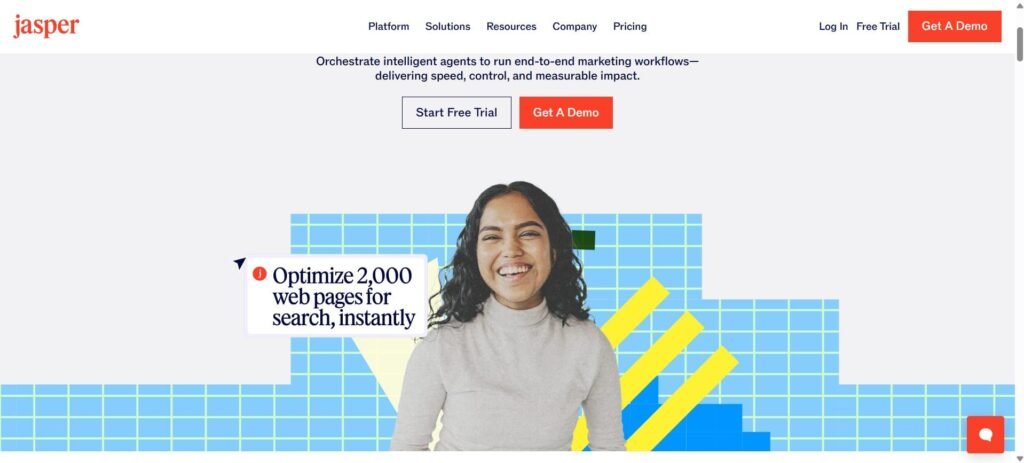
Why it’s great: Jasper is one of the most popular AI writing tools due to its balance of power and ease of use. Its user interface is friendly for beginners, yet the engine produces professional-level content.
✅ Write SEO-optimized blog posts
✅ Generate ads, newsletters, social content
✅ Tone and brand voice presets
✅ Integrations with Surfer SEO and more
🔹 Jasper AI — Pros & Cons
Pros
- Produces high-quality, human-like long-form content
- Strong brand voice and tone customization
- Excellent for blogs, landing pages, and marketing copy
- Integrates well with SEO tools like Surfer SEO
Cons
- More expensive than most AI writing tools
- Can feel overwhelming for complete beginners
- Requires good prompts for best results
Best use case: Small businesses that need content across different channels without hiring a full content team.
2. ChatGPT (OpenAI) — Most Flexible AI Writer
Best for: Versatile writing across any format
Why it’s great: While not a dedicated “SEO content platform,” ChatGPT’s natural language generation is powerful. With proper prompts, it can write long articles, emails, scripts, and more.
✅ Custom workflows with prompts
✅ Chat-based creativity
✅ Plugins available for SEO and research
✅ Always improving through updates
🔹 ChatGPT (OpenAI) — Pros & Cons
Pros
- Extremely flexible for any type of content
- Great conversational flow and creativity
- Excellent for brainstorming and outlines
- Frequently updated and improved
Cons
- No built-in SEO scoring by default
- Requires strong prompting skills
- Can occasionally hallucinate facts if not guided
Best use case: Small teams who want flexibility and control over content style.
3. Copy.ai — Best for Marketing Copy & Social Content
Best for: Ad copy, social media captions, sales copy
Why it’s great: Copy.ai focuses on marketing content with pre-built templates for ads, product descriptions, and social content.
✅ Over 100 templates
✅ Fast turnaround
✅ Easy for non-writers\
🔹 Copy.ai — Pros & Cons
Pros
- Very easy to use for beginners
- Strong focus on marketing and sales copy
- Excellent social media and ad templates
- Fast content generation
Cons
- Not ideal for long-form SEO blogs
- Limited content depth compared to Jasper
- Less control over advanced customization
Best use case: Small business owners focused on social media growth and conversion copy.
4. Writesonic — Best for SEO Blog Writing
Best for: Blog posts and SEO writing
Why it’s great: Writesonic has tools made specifically for blog writers, such as SEO optimization features, long-form article builders, and built-in outline generators.
✅ Blog post generator
✅ SEO scoring tool
✅ Content repurposing tools
🔹 Writesonic — Pros & Cons
Pros
- Built specifically for SEO blog writing
- Good balance between price and features
- Long-form article builder is beginner-friendly
- Built-in content repurposing
Cons
- Output sometimes needs editing for flow
- UI can feel cluttered
- Advanced SEO features locked behind higher plans
Best use case: Bloggers, content managers, and small businesses that want blog content that ranks.
5. Frase — Best for SEO Research + Content Optimization
Best for: SEO content research and optimization
Why it’s great: Frase is more research-focused. It analyzes top SERP pages and suggests the best structure, related terms, and questions to include.
✅ Content briefs based on top-ranking pages
✅ Keyword tools
✅ Integrated AI writer
🔹 Frase — Pros & Cons
Pros
- Excellent SEO research and SERP analysis
- Strong content briefs based on competitors
- Helps match Google search intent accurately
- Ideal for ranking-focused content
Cons
- AI writing quality is average compared to Jasper
- Less suitable for creative marketing copy
- Learning curve for non-SEO users
Best use case: Businesses that want data-driven SEO performance.
6. Rytr — Best Budget AI Writing Tool
Best for: Small teams on a budget
Why it’s great: Rytr is one of the most affordable tools that still offers high-quality outputs. It supports many languages and a wide range of templates.
✅ Affordable plans
✅ Simple UI
✅ Multi-language support
🔹 Rytr — Pros & Cons
Pros
- Very affordable pricing
- Supports multiple languages
- Simple and clean interface
- Good for short-form content
Cons
- Long-form content quality is limited
- Less advanced than premium tools
- Requires more manual editing
Best use case: Startups and micro-businesses with limited budgets.
7. Scalenut — Best for Long-Form SEO Articles
Best for: Long articles and SEO research
Why it’s great: Scalenut combines content briefs, AI writing, and SEO performance insights — making it ideal for bloggers and content teams focused on ranking.
✅ AI long-form editor
✅ SEO analysis dashboard
✅ SERP competitor data
🔹 Scalenut — Pros & Cons
Pros
- Strong for long-form SEO content
- Combines research, writing, and optimization
- Good competitor analysis features
- Ideal for content-driven websites
Cons
- Interface can feel technical
- Less effective for short marketing copy
- Output still needs human editing
Best use case: Businesses aiming for consistent organic search traffic growth.
8. Anyword — Best for Conversion-Focused Copy
Best for: Sales pages and ad copy with conversion analytics
Why it’s great: Anyword predicts performance and suggests the best copy variations for conversion — especially for Facebook ads, landing pages, and email.
✅ Performance score on copy
✅ Variant suggestions
✅ Predictive analytics
🔹 Anyword — Pros & Cons
Pros
- Excellent for conversion-focused copy
- Predictive performance scoring
- Great for ads and landing pages
- Data-driven copy decisions
Cons
- Not designed for blog content
- More useful for paid ads than SEO
- Pricing can be high for small teams
Best use case: E-commerce and direct-response campaigns.
9. Surfer SEO + AI (with Jasper/Writesonic)
Best for: Powerful SEO content + AI Writing combo
Why it’s great: Surfer isn’t a standalone AI writer but pairs extremely well with Jasper or Writesonic. You write with AI while Surfer provides SEO scoring and keyword optimization.
✅ SERP analysis
✅ Content grading
✅ Keyword structure suggestions
🔹 Surfer SEO + AI — Pros & Cons
Pros
- Extremely powerful for ranking content
- Data-backed SEO optimization
- Clear keyword and structure guidance
- Works well with Jasper or Writesonic
Cons
- Requires another AI writer to work best
- Can feel restrictive creatively
- Monthly cost adds up when combined
Best use case: Small businesses focused on ranking #1 in Google.
10. Wordtune — Best for Rewriting & Tone Editing
Best for: Improving writing quality and tone
Why it’s great: Wordtune focuses on rewriting and polishing existing content. It’s not a full content generator, but it’s invaluable for improving clarity and engagement.
✅ Rewrite suggestions
✅ Tone adjustments (formal, casual)
✅ Short–long options
🔹 Wordtune — Pros & Cons
Pros
- Excellent for rewriting and polishing content
- Improves clarity and tone instantly
- Easy browser extension
- Perfect for non-native English writers
Cons
- Not a full content generator
- Limited SEO features
- Best used alongside another AI tool
Best use case: Business owners polishing content before publishing.
How to Choose the Best AI Writing Tool for Your Small Business
Choosing the right AI writing tool depends on your goals, budget, and content type. Use this simple framework:
1️⃣ If Your Goal Is SEO & Blog Traffic
Choose:
- Writesonic
- Scalenut
- Frase
- Surfer SEO + AI
👉 Best for ranking on Google and building organic traffic.
2️⃣ If Your Goal Is Marketing & Sales Copy
Choose:
- Jasper AI
- Copy.ai
- Anyword
👉 Best for ads, landing pages, emails, and conversions.
3️⃣ If You Want Flexibility & Creativity
Choose:
- ChatGPT
👉 Best for custom workflows, brainstorming, and multi-purpose content.
4️⃣ If You’re on a Tight Budget
Choose:
- Rytr
- ChatGPT (basic plans)
👉 Best for startups and solo entrepreneurs.
5️⃣ Best Strategy for Small Businesses (Recommended)
Instead of one tool, use a combo approach:
- ChatGPT or Jasper → content creation
- Surfer SEO or Frase → SEO optimization
- Wordtune → final polishing
This setup delivers high-ranking, human-quality content without a large team.
📈 How Small Businesses Should Use AI Writing Tools
AI writing tools are most effective when they fit into a strategic workflow, not just one-off writing. Here’s a repeatable process that boosts SEO rankings and conversions:
1. Keyword Research First
Before writing, identify keywords with:
- Clear search intent
- Relevant to your audience
- Reasonable search volume
- Commercial potential
Tools like Ahrefs, SEMrush, and Surfer SEO help with research.
2. Create a Content Brief
Use Frase or Surfer SEO to produce a brief:
- Target keyword
- Related terms
- Questions people ask
- Required headings and structure
This ensures the AI writes with purpose.
3. Generate Draft With AI
Use one of the tools above based on your needs:
- Writesonic/Scalenut for blog
- Copy.ai/Anyword for marketing copy
- ChatGPT for custom content
4. Edit & Optimize
AI doesn’t replace human review. Polish:
- Grammar
- Accuracy
- Brand voice
Use Wordtune or native editors.
5. Add SEO & Publish
Ensure:
- Meta title & description
- Internal links
- Featured image
- Schema markup (where possible)
🚀 Tips to Maximize Results
✔️ Don’t rely on AI alone — fact-check every output
✔️ Use AI for ideas and drafts, not final output
✔️ Combine tools for best results (e.g., Surfer SEO + Jasper)
✔️ Update old content with AI rewrites to improve rankings
✔️ Track performance with Google Analytics & Search Console
🧠 Final Thoughts
For small businesses in 2026, AI writing tools are no longer optional — they’re essential. When used correctly, they:
✔️ Save time
✔️ Reduce content costs
✔️ Expand publishing capacity
✔️ Improve SEO performance
✔️ Increase conversions from better messaging
Whether you’re a blogger, small store owner, agency founder, or marketer, there’s an AI writing tool here that fits your goals and budget.
Start with one tool, master it, and expand as your business grows.