

The B2B Social Media Paradox: Why Your “Safe” Strategy Is Failing You
Picture this: Your company invests in a sleek website, produces detailed white papers, and your sales team is primed for action. Yet, the pipeline is thinner than expected. You’re on LinkedIn—of course—posting company milestones and product updates as part of your B2B social media marketing efforts. But the engagement is crickets. The leads aren’t flowing.
Here’s the uncomfortable truth: Traditional, corporate-centric B2B social media marketing is broken. The old playbook of treating social channels as mere megaphones for press releases is not just ineffective; it’s actively turning off your potential clients.
In today’s landscape, decision-makers are people first. They scroll through feeds seeking insight, community, and solutions—not another sales pitch. They’re on platforms you might not consider “traditional” for B2B, finding value in unexpected places. This post isn’t about rehashing the “be on LinkedIn” advice. It’s a deep dive into the strategic shift required to build authentic authority, humanise your brand, and generate measurable business outcomes through B2B social media marketing.

B2C vs. B2B Social Media marketing: It’s Not What You Think
We often draw a hard line between B2C (emotional, broad, viral) and B2B (rational, niche, direct) strategies. This is an oversimplification that holds companies back.
B2C excels at tapping into identity and aspiration. B2B, at its core, is also about identity—the professional identity of a decision-maker who wants to be seen as smart, informed, and effective. The transaction is rational, but the connection is human.
The key difference lies in the “Buyer’s Journey” complexity. A B2C purchase might be a single-scroll impulse buy. A B2B purchase involves multiple stakeholders, lengthy consideration, and significant risk. Your social media strategy must nurture this entire journey, not just shout at the finish line.
| Aspect | Traditional B2B Approach | Modern B2B Approach |
|---|---|---|
| Primary Goal | Lead Generation | Authority & Trust Building |
| Content Core | Product Features, Company News | Educational & Problem-Solving Insights |
| Channel Focus | LinkedIn (Only) | LinkedIn + [Niche Platforms] (e.g., X, YouTube, Community Slack/Discord) |
| Tone & Voice | Corporate, Formal, “Robotic” | Human, Conversational, Expert |
| Metric Obsession | Likes, Follower Count | Engagement Quality, Share-of-Voice, Conversation Leads |
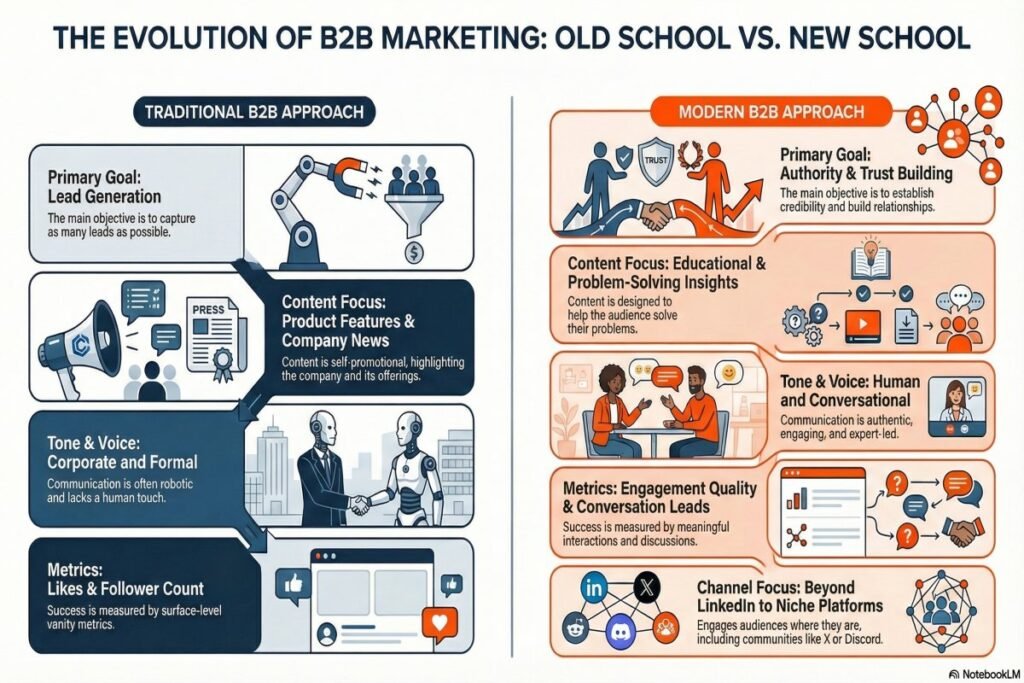
The Pillars of a Modern B2B Social Media Marketing Strategy
Moving beyond the paradox requires rebuilding your approach on three core pillars.
1. Platform Diversification: LinkedIn Is Your Hub, Not Your Universe
LinkedIn remains the undisputed B2B social media marketing, as it is the top channel for content marketing used by 96% of B2B marketers, according to the latest Content Marketing Institute report. But the kingdom has expanded.
- X (Twitter): It’s the global water cooler for real-time industry conversation. Use it for quick insights, engaging with influencers, participating in Twitter Spaces (audio chats), and sharing bite-sized thought leadership. Search is its superpower for discovering prospect pain points.
- YouTube: Don’t shy away from video. “A Day in the Life” demos, deep-dive tutorials on industry problems, and webinar snippets perform exceptionally. Video builds familiarity and trust faster than any text post.
- Niche Communities: Platforms like Reddit, specific Slack groups, or Discord servers are where your clients truly talk shop. Lurking (and thoughtfully contributing) here provides unparalleled market intelligence. A personal anecdote: I once discovered a critical feature gap for a SaaS client not from a survey, but from a detailed complaint thread in a r/marketing subreddit. That insight directly shaped their roadmap.

2. Content with a Point of View (POV): From Broadcast to Dialogue
Forget “content is king.” Context is emperor. Your content must enter an existing conversation in your buyer’s mind.
- Educate, Don’t Advertise: Create content that solves problems before they need your product. A cybersecurity firm should post about “5 Common Phishing Tactics Targeting Remote Teams,” not just their firewall specs.
- Leverage Employee Advocacy: Your team is your most credible asset. Encourage subject matter experts to build their personal brands. A prospect is far more likely to trust a heartfelt thread from an engineer than a corporate post. Tools like Shield or Hootsuite can help amplify employee-shared content safely.
- Embrace “Fugly” Content: Not everything needs a designer. A quick Loom video answering a common question, a rough sketch on a napkin explaining a concept, or a candid post about a failure can be 10x more engaging than a polished brochure. It signals authenticity.
3. Measuring What Actually Matters: Beyond Vanity Metrics
If your report to leadership focuses on likes and follows, you’re speaking the wrong language. Tie social to business outcomes.
- Conversation Rate > Click-Through Rate: How many DMs or comment threads are you having with qualified prospects? These are high-intent signals.
- Share of Voice: Are you part of the key conversations in your industry? Tools like Brandwatch or even free LinkedIn searches can show how often you’re mentioned vs. competitors.
- Pipeline Influence: Use UTM parameters and CRM integration (like HubSpot’s social tools) to track how social touches lead to opportunities. A lead might first engage with a YouTube tutorial, then follow on LinkedIn, and finally download a whitepaper. Social’s role in that multi-touch journey is critical.
The Engine of Trust: Social Proof in a B2B Social Media Marketing World
In a high-stakes B2B decision, social proof is the ultimate shortcut to trust. Social media is the perfect stage to showcase it.
- Case Studies as Stories: Don’t just link to a PDF. Create a carousel post highlighting a client’s challenge, your unique solution, and the tangible result. Tag the client (with permission!). Let them be the hero.
- Testimonials & Video Reviews: A 60-second video testimonial from a happy client executive is pure gold. It can be repurposed across all platforms.
- Live Engagement: Host LinkedIn Live Q&As or Twitter Spaces with clients. Nothing is more credible than an unscripted conversation where a client sings your praises to a live audience.
Your Action Plan: Getting Started Tomorrow
This shift can feel daunting. Start small, but start strategically.
- Listen for a Week: Spend 30 minutes daily only listening. What are your ideal clients talking about on LinkedIn? X? What are their frustrations? Use a simple spreadsheet to log themes.
- Pick One Platform to “Master”: Double down on where your audience is most active. Is it LinkedIn for a broad reach or a niche forum for a deep connection?
- Empower One Advocate: Identify one passionate subject matter expert on your team. Help them craft one insightful, non-promotional post per week.
- Change One Metric: In your next report, replace “follower growth” with “quality conversations started” or “social-sourced pipeline generated.”
Conclusion: It’s Time to Get Human
B2B social media marketing is no longer a support function. It’s a frontline strategy for business development, customer retention, and market intelligence. It’s about building a known, liked, and trusted brand in the digital spaces where your buyers spend their time.
The brands that will win are those that stop broadcasting and start connecting. They provide value before demanding it. They show up human in a world of corporate noise.
What’s the one “human” tactic you’ve seen work wonders in B2B social? I’d love to hear your stories and experiments. Share your thoughts in the comments below—let’s move this conversation forward.


Pingback: AI Marketing Tools for Small Business (2026 Guide) - daaimdigital.com